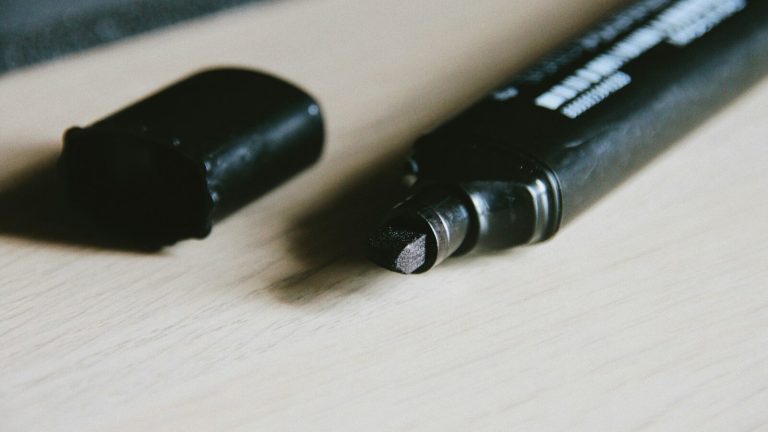
You uncap a marker and it barely draws a line. The nib looks fine. The cap was on. It’s not a broken barrel — it’s a dried marker. Before you bin it, try these three revival methods. They work on most alcohol markers including Finecolour, Copic, Ohuhu, and Touchnew — and knowing how to revive alcohol markers will save you from throwing away markers that still have months of life left.
Key Takeaways
Three methods, in order of how quickly they work.
- Method 1 (fastest): drop 2-3 drops of 99% isopropyl alcohol onto the nib and let it soak in for 10 minutes — works for lightly dried markers.
- Method 2 (most thorough): refill the ink barrel directly via pipette — restores both the solvent and the pigment.
- Method 3 (last resort): remove and reseat the nib, or replace it if it has hardened permanently.
- Store markers capped tightly and horizontally — it’s the most reliable way to prevent drying in the first place.
- A marker that draws faint color with no real pigment is genuinely dead — replacement is cheaper than frustration at that point.
Why alcohol markers dry out
Before the methods: a quick explanation of what actually happens when an alcohol marker dries, because it changes how you approach revival.
Alcohol markers use isopropyl alcohol (or a similar solvent) as their carrier — it’s what carries the pigment from the ink reservoir to the nib and onto the paper. When the marker isn’t capped tightly, or when it’s stored cap-up for long periods, the solvent evaporates through the nib. The pigment stays behind, but without solvent it can’t flow. The ink reservoir isn’t empty — it’s just too thick to move.
This matters because it means most ‘dried’ markers haven’t run out of ink. They’ve run out of solvent. The revival methods below work by restoring that solvent balance.
Method 1: rubbing alcohol soak
This is the fastest method and the right first attempt for any lightly dried marker.
What you need
A small dropper or pipette. A bottle of 99% isopropyl alcohol. Not 70%, not 91% — the water content in those concentrations dilutes the ink and can introduce a milky residue into the nib. Pharmacy rubbing alcohol is usually 70% — check the label before using it on markers.
Steps
Apply 2-3 drops of 99% isopropyl directly onto the nib tip. Place the marker cap-down (nib pointing down) for 5-10 minutes to let the solvent wick upward through the nib and into the ink reservoir. Test on scrap paper. If color is returning, repeat once more and let it sit an additional 5 minutes. If there’s no improvement after two rounds, move to Method 2.
When to use it: lightly dried markers where the nib still feels slightly soft. If you know how to fix dried out alcohol markers from a short storage gap (a few weeks uncapped), this is your first step.
Method 2: refill the ink
If the isopropyl soak doesn’t fully restore the marker, the ink reservoir is likely dry — not just thick. You need to rehydrate alcohol markers from the inside.
What you need
The correct refill ink for your marker brand. For Finecolour markers, refill inks come in 9 colors with pipette delivery — available through the official Finecolour color range. Using the correct brand’s refill matters: third-party inks can shift the hue (noticeably in light skin tones and pastels) and may have different solvent concentrations that don’t play well with the nib material.
Steps
Remove the nib (most alcohol marker nibs pull out with light pressure or with a cloth to protect your fingers). Using the pipette, add 5-8 drops of refill ink directly into the barrel — not onto the nib. Replace the nib and cap. Lay the marker horizontally for 10 minutes to let the ink wick from the barrel to the nib. Test on scrap paper. Expect the first few strokes to run slightly heavy as the reservoir re-equalises.
When to use it: markers where the isopropyl soak gave partial improvement, or where you can see the reservoir looks empty. This is also the method to use for how to refill Finecolour markers as a routine maintenance step before a marker runs completely dry.
Method 3: replace or reseat the nib
If Methods 1 and 2 both produced limited results, the nib itself may be the problem — either hardened, malformed, or not seated correctly after the last refill attempt.
Steps
Wrap the nib with a cloth or paper towel to protect your fingers from staining. Pull it out with pliers or by hand. Inspect it: if the nib is soft and pliable, reseat it firmly into the barrel and confirm it’s aligned correctly. If the nib is hard and solid — it won’t compress at all under light pressure — it has dried permanently and needs replacement.
Replace with the correct size nib for your marker (chisel, bullet, or brush depending on your Finecolour line). Add 2-3 drops of isopropyl to the new nib before inserting to help the ink wick. Let the marker rest horizontally for 10 minutes before testing.
Note: don’t replace the nib without addressing dried ink in the barrel — a new nib in a dry barrel will just dry again within days. Pair nib replacement with Method 2 for lasting results.
When to use it: when Method 2 produced color but it still looks streaky or uneven, suggesting the nib itself is damaged.
When a marker is beyond saving
Some markers genuinely can’t be revived. Honest indicators that it’s time to replace rather than revive:
- The barrel is completely empty and the color is discontinued — no refill available.
- The nib is permanently hard (stone-solid, not just stiff) and the brand doesn’t sell replacement nibs.
- The marker was stored uncapped for months — pigment has fully degraded and the ink draws faint regardless of how much solvent you add.
- Method 2 produced no color at all even after two refill rounds — the nib material itself has degraded.
Prevention is simpler than revival: cap every marker after every use, store horizontally, and keep markers away from direct heat. Finecolour markers stored correctly — and refilled before they run dry — last years. See how to make alcohol markers last longer for the full storage and maintenance system.
FAQ
Four questions from art forums and YouTube comments about dried markers.
Can you revive dried alcohol markers with water?
No — water will not revive an alcohol marker and may ruin it. Alcohol markers use isopropyl alcohol as their carrier, not water. Adding water dilutes the ink, disrupts the pigment suspension, and can permanently clog the nib. Use 99% isopropyl alcohol only.
How long does it take to revive a dried marker?
The isopropyl soak method takes about 10-15 minutes total. The refill method takes about 10 minutes for the ink to wick from the barrel to the nib tip. If neither has produced results after two rounds each, the marker has degraded beyond practical revival.
Does reviving a marker affect the color?
The isopropyl soak slightly dilutes the ink for the first 5-10 strokes as the fresh solvent moves through the nib. Color returns to normal as the solvent re-equalises. If refilling, match the color exactly — third-party refill inks can shift the hue noticeably, especially in lighter skin and pastel tones.
Can I use any isopropyl alcohol to revive my markers?
Use 99% isopropyl. Concentrations of 70% or 91% contain too much water. Pharmacy rubbing alcohol is usually 70% — check the label. The water interferes with the solvent carrier and may introduce a milky residue into the nib that’s difficult to clear.
Final Thoughts
Most dried-out markers are worth at least one revival attempt before replacing. The three methods above cost almost nothing and take less than 20 minutes total. Method 1 (isopropyl soak) handles most lightly dried markers. Method 2 (refill) handles everything else except a permanently damaged nib. Between them, you can revive alcohol markers that would otherwise end up in the bin.
For Finecolour markers, the refill system makes this even more practical — refill inks are available for all lines. Browse the full Finecolour color range including refill inks at /palette/.