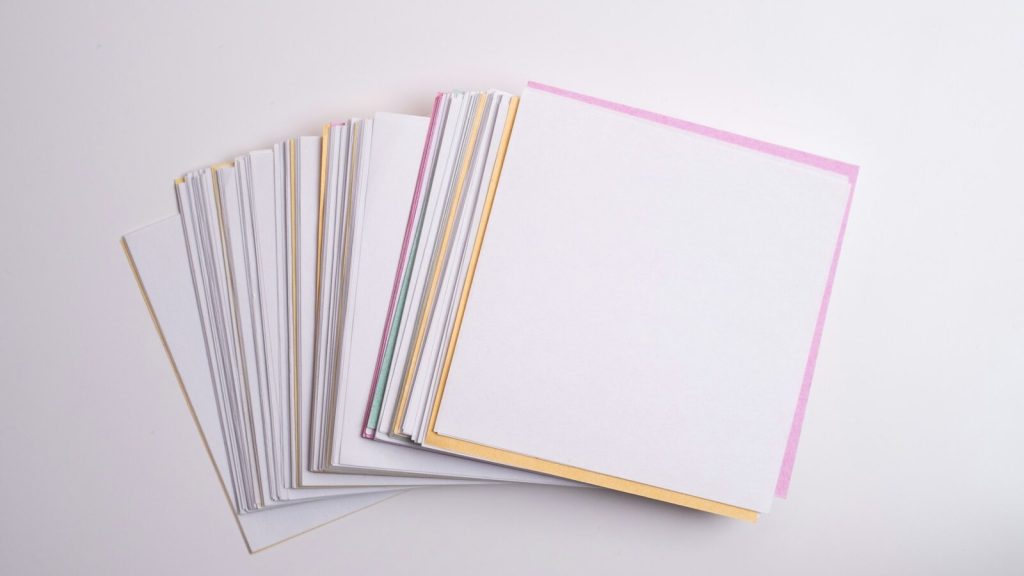
Choose an alcohol marker protective sheet that covers your working page, has a clean contact surface, and is practical to replace or maintain. A small insert that needs repeated moving gives you another condition to check. A reusable sheet needs care you can follow for that exact product.
Maker instructions and named coloring demonstrations support these choices. Finecolour has not physically compared the materials. Your paper, markers and coloring method still need a spare-paper check before the next drawing.
Key takeaways
- Place the barrier directly beneath the page you are coloring.
- Check coverage near the edges and binding before opening a marker.
- Inspect used backing for old ink before moving or reusing it.
- Choose fresh backing or follow the exact reusable protector's care instructions.
What the Sheet Protects
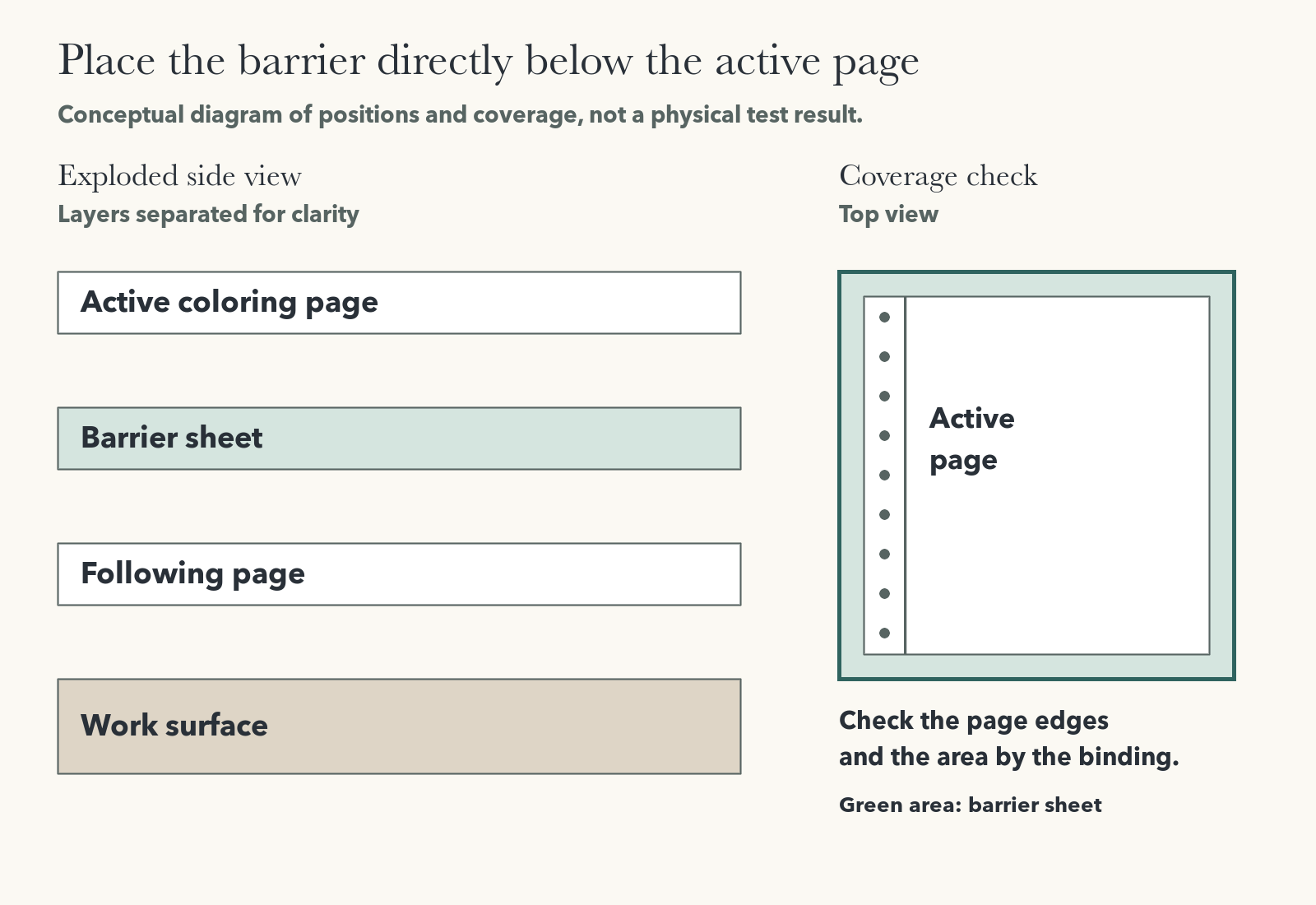
A backing sheet sits below the active page to protect what is underneath. In a coloring book, that means placing it above the following page. A mat below the whole book leaves the intervening pages above it. Check that position separately from the barrier between pages.
Keep the active page's reverse, the next sheet and the desk separate in your checks. Ink may reach the reverse of the page you are coloring before it reaches the barrier. Protection underneath doesn't establish that a drawing printed on that reverse will remain usable.
For the wider explanation, read why alcohol markers bleed through paper. If the drawing paper itself is the problem, choose the paper you draw on before treating a new backing sheet as the answer.
Choose Between Replaceable and Reusable Protection
Scrap paper or cardstock you can replace
Fresh scrap paper or cardstock is a candidate when you prefer replacing used backing to cleaning it. Crayola's UK guidance, checked 2026-10-13, recommends thick scrap paper below artwork to protect surfaces and other pages. Coco Wyo's FAQ, checked the same date, lists cardstock, plastic and extra paper as examples.
Those instructions don't give a universal thickness or layer count. Start with clean backing that fits your page, then check your actual marker application. Keep replacement pieces available if the working area becomes stained during coloring.
A reusable protector with care instructions
Kiki & Kelli describes its own clear plastic protector as 8 by 10 inches, sized for Kiki & Kelli Coloring Books. The page says to use it beneath the page being colored. Its cleanup instruction mentions rubbing alcohol and depends on the marker used. These product instructions were checked 2026-10-13.
A Brighter Year, checked 2026-10-13, describes a reusable sheet fitted to ABY Mini Coloring Books and inserted between pages. Its No-Bleed product name doesn't establish an independently tested result. The page gives no general cleaner or fit promise for another book.
Coco Wyo's FAQ describes tear-out backing in its Food & Drink, Stress Relief and Comfy Patterns Mini Coloring Books. That statement, checked 2026-10-13, applies to those editions. Check your own book's instructions rather than assuming every edition includes the same insert.
Paper over a protector as a trial option
One r/Coloring reader reports putting printer paper above a binder divider cut to fit their book. That is an optional setup to try on spare paper. The report doesn't establish that layering improves protection with every divider or marker.
Inspect both pieces when checking that arrangement. The paper's condition and the divider's surface are separate observations. Renewing the top piece doesn't establish that the piece below it is clean.
| Option | Upkeep choice | Fit and inspection check | Evidence limit |
|---|---|---|---|
| Replaceable scrap paper or cardstock | Replace stained backing | Check coverage and old color before another page | Maker guidance and individual reports, no universal thickness rule |
| Reusable protector with documented care | Follow the exact product's instructions | Check the stated book fit and contact surface | Product-specific claims, no universal cleaner or protection result |
| Paper over a protector | Inspect both pieces, renew or maintain each as needed | Check the combined placement and each surface | One reader's setup, a trial candidate |
Fit the Whole Page and Place the Sheet Below It
Check the edges and binding
Lay the candidate against your actual page before coloring, checking the outer edges and the area beside the binding. A product sized for a mini book may leave part of a larger page uncovered.
Aim for coverage that lets you work without repeatedly sliding a smaller insert. Trim only backing that is suited to trimming, following any supplied instructions. Check the fit again with the book open at the page you intend to color.
Check which pages the sheet separates
Lift the active sheet and insert the barrier directly beneath it. Check that the next page you want to preserve is below the barrier. Follow the book's placement instructions rather than counting pages down from the cover.
Crayola's US workspace guidance, checked 2026-10-13, recommends a protective sheet under the working page. Kiki & Kelli specifies the same position for its protector. Neither instruction establishes that the active page's reverse stays unmarked.
If keeping a design on the reverse matters, choose a coloring-book format around that requirement. For bound drawing pads, check sketchbook binding and usable sides. A barrier's placement doesn't settle either format choice.
Recheck before moving it
Creative Paula describes an undersized protector that needs moving and ink returning onto the working page. Katherine Learns Stuff describes the same concern with a small supplied sheet in her setup. Their observations support pausing to inspect a used surface before changing its position.
Check for old ink and uncovered areas before sliding the sheet. Replace used paper or follow the exact protector's care instructions when its condition is uncertain. No fixed waiting time follows from these demonstrations.
Check Your Setup on Spare Paper
Keep the working conditions comparable
Use a spare piece of the drawing paper you intend to color. Try the marker and fill or blending pattern you expect to use, with the candidate backing in place. A quick single stroke doesn't stand in for repeated coloring over the same area.
Record the paper, marker, backing and placement in your notes. Keep the paper and application comparable when trying another backing option. That lets you identify what changed. The observation applies to the setup you used.
Inspect the reverse, following sheet and work surface
Inspect the active sheet's reverse, the following sheet and the surface below them separately. Look for fresh ink reaching underneath and old color returning from used backing. Write down what you see in each location.
A clean following sheet doesn't establish a clean active reverse. An unexpected color is worth checking against the backing's old marks. One reader reported purple transfer from reused cardstock during green-marker work, but that observation doesn't diagnose every unwanted mark.
Change the backing when the check fails
Pause if the work area is uncovered or you see residue or transfer. Try fresh backing, correct the fit, or follow the documented care for your protector. Repeat the check on spare paper before returning to artwork.
If the active sheet remains unsuitable, reconsider that paper or book. Adding protection below it doesn't promise to make every coloring page usable on both sides.
Decide Whether to Replace or Reuse It
Replace stained backing before another page
Use condition to decide when to replace an alcohol marker backing sheet. Check the area that will touch the new page. A piece that caught ink on the last drawing needs inspection before it becomes the next drawing's support.
Choose fresh backing when old marks leave its condition uncertain. There is no established number of pages or sessions that every scrap sheet will last. Recheck when changing pages, even with the same markers and book.
Keep cleaning tied to the exact protector
For the Kiki & Kelli sheet, follow the marker-dependent care statement on its product page. That instruction doesn't supply a cleaning method for a different plastic sheet or a mat described as silicone. Identify your protector and look for its maker's instructions before choosing a cleaner.
If those instructions are missing, use fresh scrap backing you can check rather than improvising with a solvent. A reusable label alone gives no cleaning procedure. Inspect and check the maintained sheet again before placing new artwork on it.
Keep backing separate from blending tools
A barrier belongs below the artwork. A palette, a spare swatch offcut and a blender serve different tasks. To decide which tool belongs in the coloring process, separate backing from blending tools.
Choose Your Backing Before the Next Page
Choose a barrier sheet whose coverage and upkeep fit the way you work. Place it directly below the active page, check its contact surface, and use fresh backing or documented care before reuse. Your spare-paper check supplies the observation that product names and another person's demonstration leave open.
Sources
- Kiki & Kelli Protective Sheet, primary product instructions, checked 2026-10-13.
- No-Bleed Protector Sheet for Alcohol Markers, A Brighter Year product page, checked 2026-10-13.
- FAQs - COCO WYO, publisher guidance, checked 2026-10-13.
- How do I prevent alcohol-based maker colours from bleeding through the paper?, Crayola UK guidance, checked 2026-10-13.
- What paper works best with alcohol markers?, Crayola US guidance, checked 2026-10-13.
- Mastering ALCOHOL MARKERS: Essential tips for Adult Coloring, Creative Paula, relevant account at 47.44–99.36 seconds, transcript retrieved 2026-10-13.
- Ohuhu Alcohol Markers Review + Beginner Guide (Bleed, Blend & Paper Tests), Katherine Learns Stuff, relevant account at 468.80–514.16 seconds, transcript retrieved 2026-10-13.
- Reader comment on a cut-to-size protector with paper on top, individual community report archived 2026-10-13.
- Reader report of old color transfer from used cardstock, individual community report archived 2026-10-13.